Great board and card games from 2016
After 10 years, these games

A decade. I cannot believe it’s been a decade since 2016. When I look back at the games released in 2016, I see a list of some incredible, well-regarded games. Games you already know, games you already love.
I could sit here and say something about colonizing Mars (but I won’t be doing that), moving mechs across the countryside in Scythe (Stegmaier) or, I don’t know, feasting for Odin or something in A Feast for Odin (Rosenberg).
We’re going to start today with trick-taking, because 1) of course we are, and 2) there are two wildly different trick-taking games that are also very similar if you’re squinting.
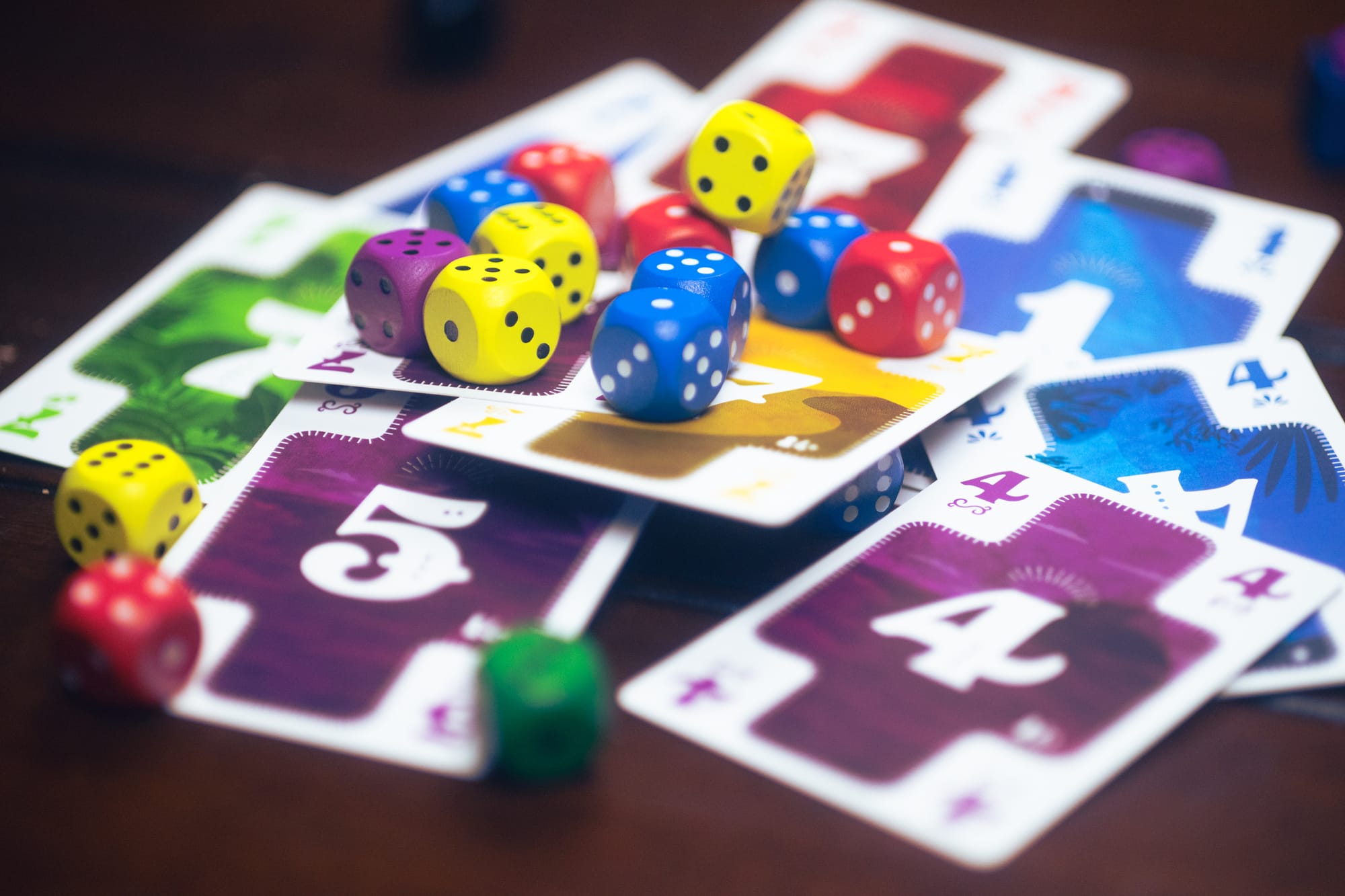
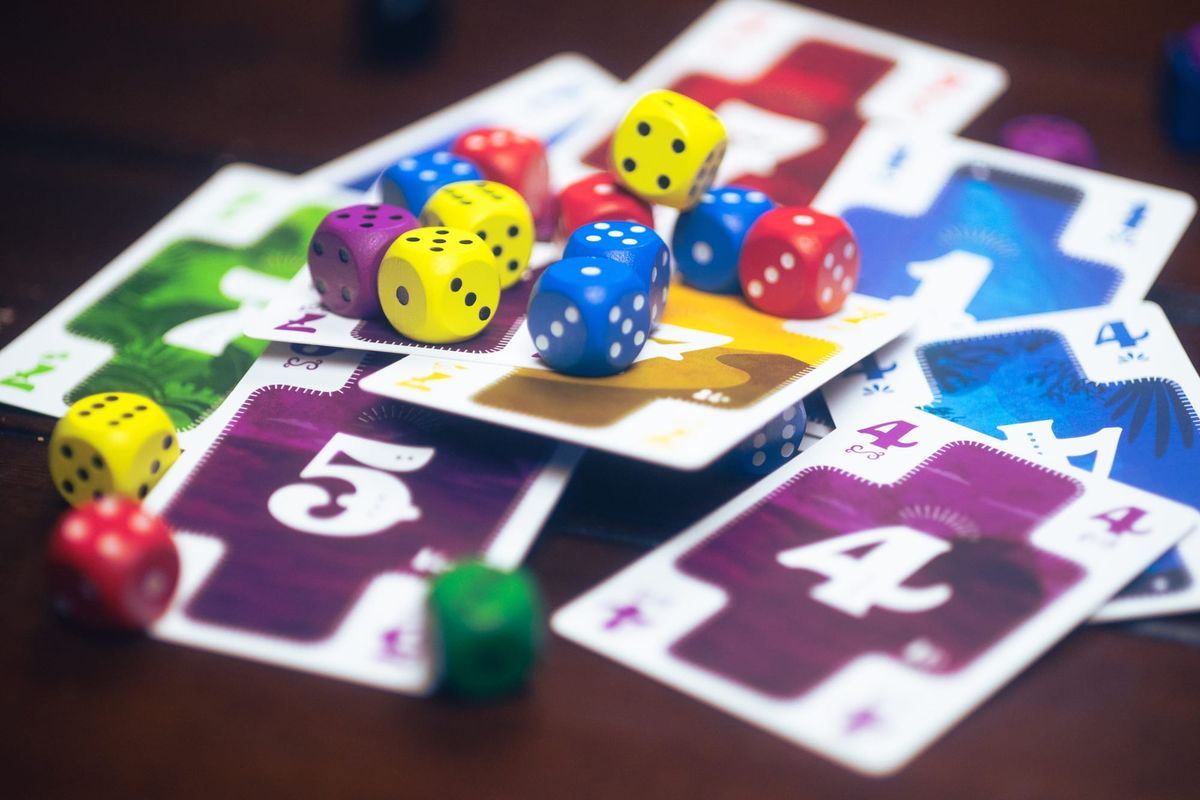
Nokosu Dice (Matsumoto, 2016) is one of those games that you’ll almost certainly have seen topping the lists: “My favorite trick-taker,” folks declare. And perhaps with good reason, because Nokosu Dice is sort of the gold standard for trick-taking games that implement dice (of which there are, I believe, several. But certainly not many.), and it does it actually quite simply. You’ll draft your dice at the beginning of the round, and you'll use one of those dice to make a bid for how many tricks you'll win. It's all actually fairly straightforward as far as trick-taking games these days go, and that really works in its favor. You don't have to learn an unusual ruleset, there's no rotating trump suit, and you don't have much chaos to contend with. You do, however, need to think strategically, and you need to harness the random input into a predictive bid.
Mythical Dice (Reindl) is a trick-taking game where you have no cards, but you do have dice. It’s also actually just Skull King (Beck and Beck, 2013), fundamentally. It’s got that Skull King/Wizard hand-size thing going on, where you start with one card in the first round and an additional one for each round, although in this game, it’s dice. And when you play a die to a trick, you roll the die. If you thought Skull King was chaotic (and it is), Mythical Dice ramps up the chaos. It really shouldn’t work, but it does. And while you must follow suit, it’s just the highest number rolled (or one of three special symbols) that wins the trick. Each die color has a range of numbers — some are stronger, some are weaker, but they all have a white flag on them that means you’ll not win the trick.
There’s a certain humor in Mythical Dice (then Mino Dice) being released the same year as Nokosu Dice. Both are trick-taking games that use dice, but they use them in such a wildly different fashion that you’d be forgiven for thinking the games bear no real relation. Nokosu Dice is refined, precise — you know exactly what you have in your hand and on the table, and you will be tasked with making difficult decisions about how your dice and cards interact. Mythical Dice is chaotic and silly, and if you try to be strategic with how you play your dice, you’ll probably end up rolling a white flag unexpectedly and desperately trying to win another trick. Or everyone else in a six-player game will roll a white flag and you’ll be stuck winning a trick you were certain you wouldn’t win.

Encore! (Brand and Brand) is a roll-and-write game that dropped right in the middle of the roll-and-write craze, but it took a good three years before it actually had an English release. Of course, there’s nothing language-dependent in the game, so I set out to find a German copy. That diminished access made this game into a bit of a legend among roll-and-write games, as is often the case.
Did it deserve a reputation boost because of scarcity? Perhaps not, but in the realm of roll-and-write games, this one’s as good as any. It helped shape the genre in an interesting way, as it’s among the earliest of what we might comfortably call the ‘modern’ roll-and-writes. (There are obviously lots of games where you roll a die and write on a sheet of paper.) It predates the hot-shots of the genre — That’s Pretty Clever! (Warsch, 2018) came a couple of years later, as did Railroad Ink (Hach and Silva, 2018) and On Tour (DeShon, 2019) followed those two. Qwixx (Benndorf, 2012) and Qwinto (Lach and Rapp, 2015) both came earlier, and they’re both great games, but they’re not Encore!; they lack the bold visual design that I think still sets this game apart, and I do think it informed the visual vocabulary of the genre in important ways.
I know none of this is about Encore as a game, but there’s an affordable app version of the game, and really, I don’t think it makes a difference if you play it with people or not. You’ll understand the game well enough to know if you like it.
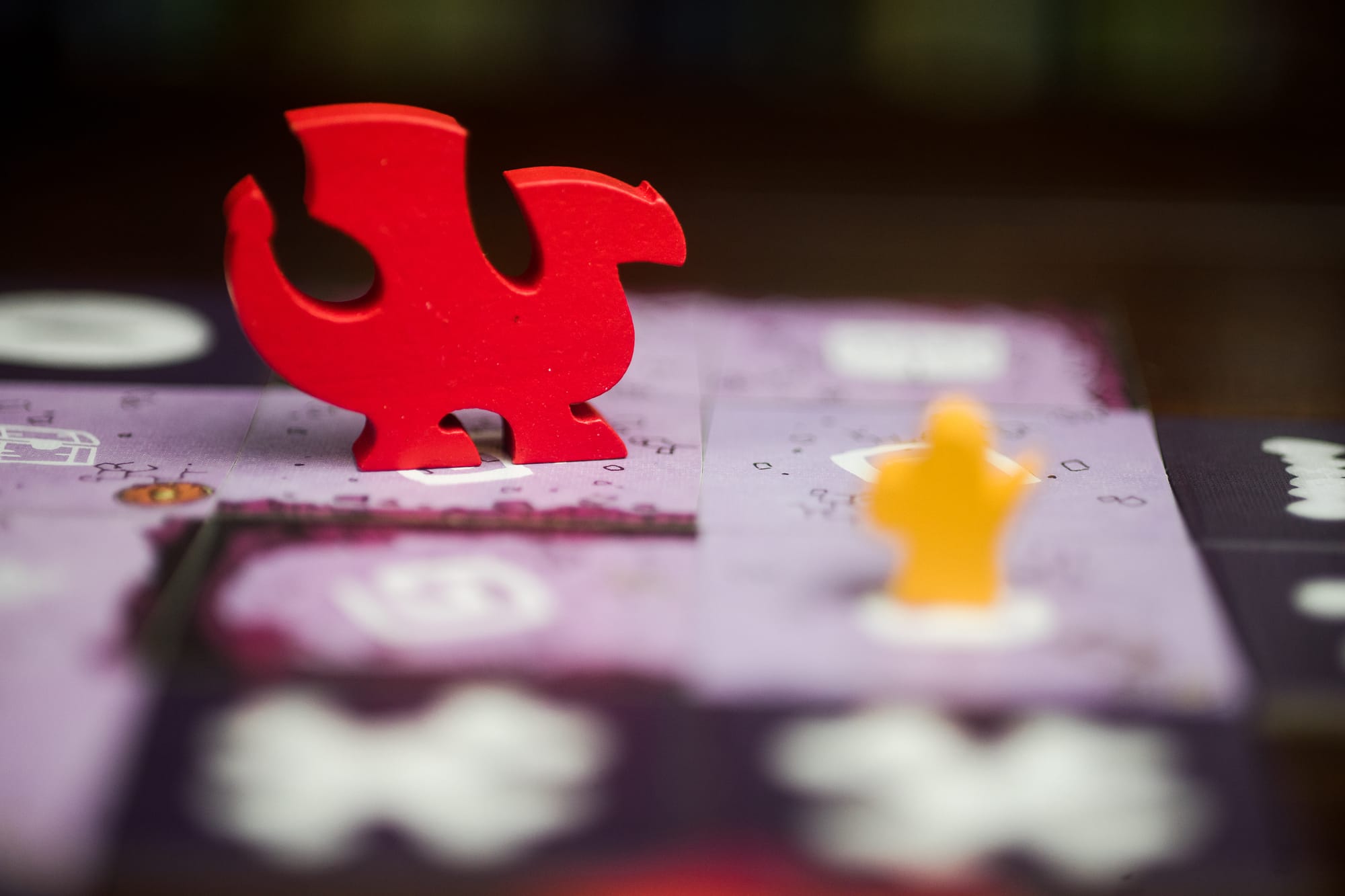
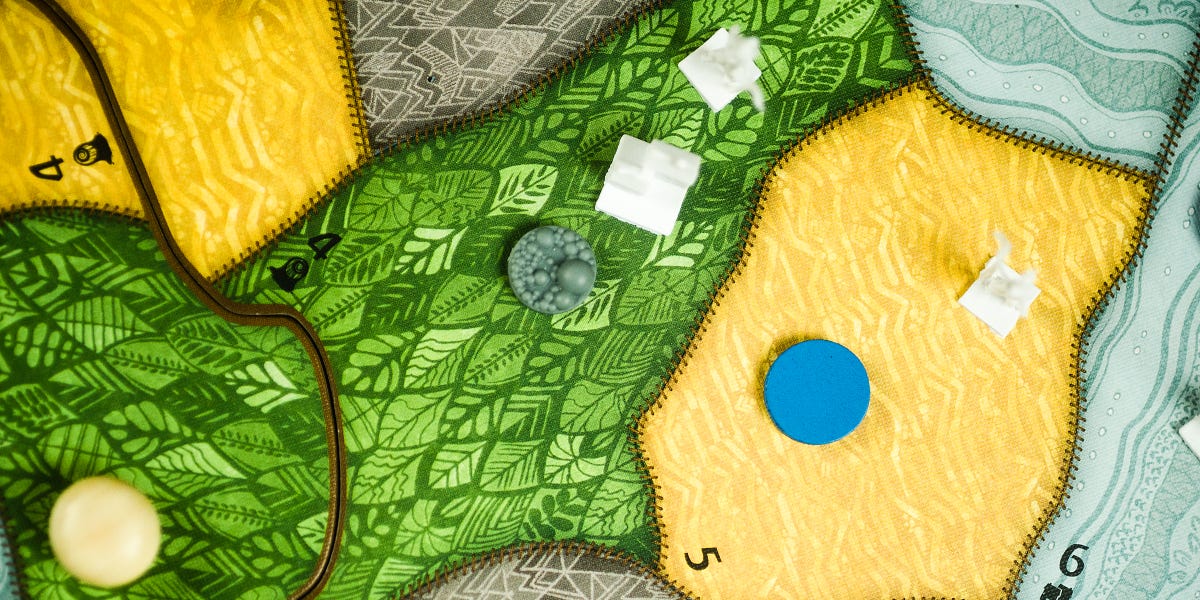
Vast: The Crystal Caverns (Leder and Somerville) may be best known for being the game that preceded Root (Wehrle, 2018), though in reality the only shared element is the asymmetric roles. Vast was topping everyone’s lists in 2016 (and 2017), with each player taking on a different role in a cave. One player acts as a dragon attempting to flee the cave, or as the thief trying to take treasure from the cave, or as the knight looking to slay the dragon, or as the goblin attempting to kill the knight, or as the cave itself, attempting to collapse in on those trying to make trouble inside.
It’s been some time since I’ve played Vast. As with any even moderately strategic game with fully asymmetric rules, there’s a lot to teach when you’re introducing the game to new players. That extends outward to players who haven’t played their roles previously, too. There’s just a lot to teach, and it’s not as intuitive as, say, Root.
There’s that word again. Root. The comparisons don’t always flatter Vast, but it’s a hard thing, isn’t it? Root seems to have been a generational game. The art’s perfect for drawing in new players, but the play is deeply strategic, engaging and more than a little cutthroat, betraying the theme and visuals. It works so well. We’re still two years away from Root at this point, and Vast is carving out new paths for asymmetric gaming, at least if we’re not considering wargaming in the mix.
This isn’t about Root, though. It’s about Vast. Vast is the game that sort of sealed Leder Games as ‘the asymmetric games publisher’ for a while, with Ahoy (Loring-Albright, 2022) and Arcs (Wehrle, 2024) pushing that direction. They’re continuing that way, too, with Kart (Robertson, 2027). And while I’m normally not one to talk too much about a publisher, instead preferring to focus on designers and developers, this is the unusual case where the designer, Patrick Leder, is also the publisher, so there’s a real connection there.
With the departure of Root, Arcs and Oath (2021) designer Cole Wehrle to form a studio with longtime Leder Games (and Vast specifically) illustrator Kyle Ferrin, among other seasoned industry professionals, there’s some intrigue around Leder Games again. Will Vast reappear? One wonders. Both Vast: The Crystal Caverns and its sequel Vast: The Mysterious Manor (Leder, 2019) are still in print, and, of course, there’s some direct evidence (thanks to Board Game Wire) that there is a plan there.
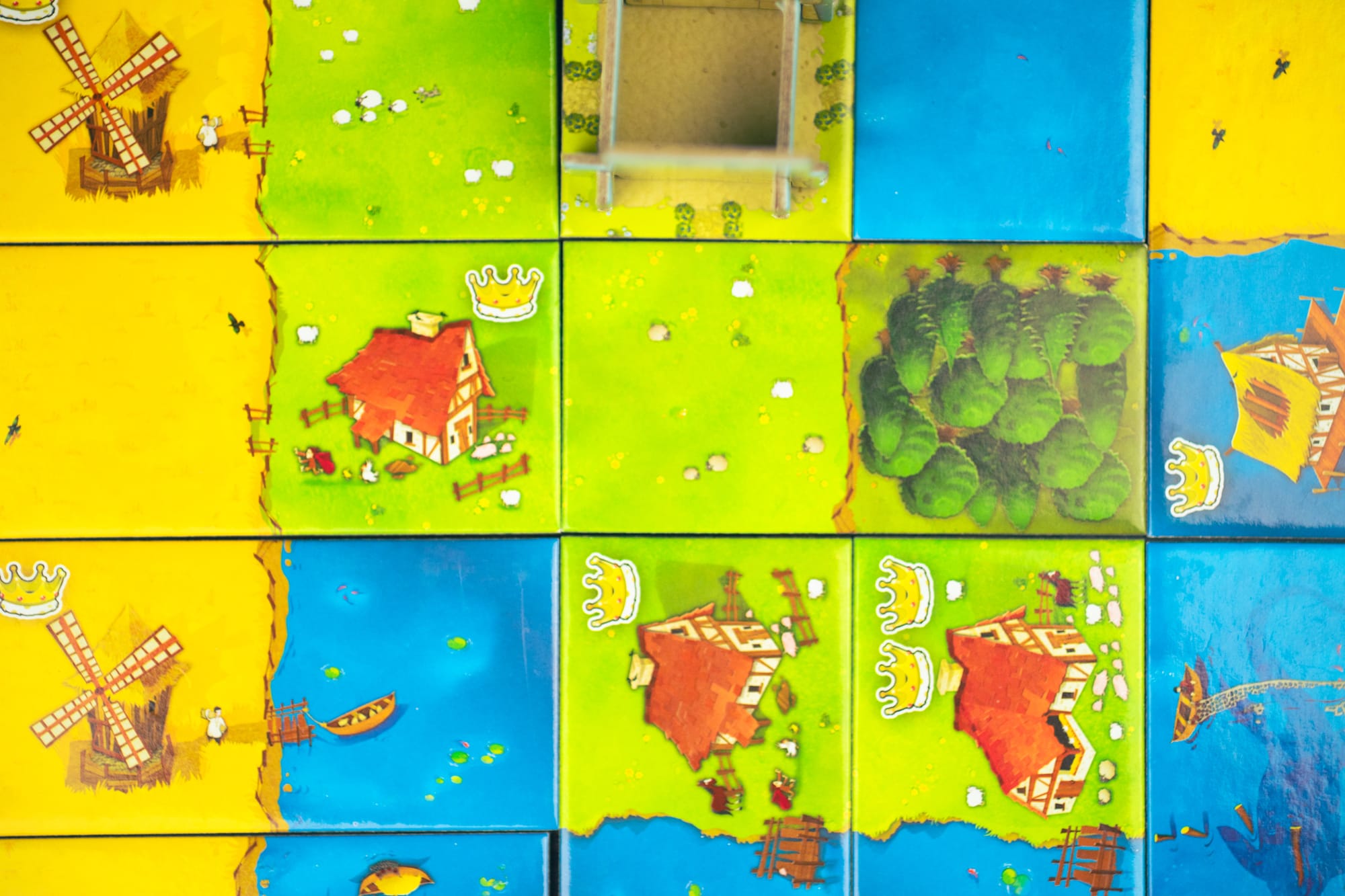
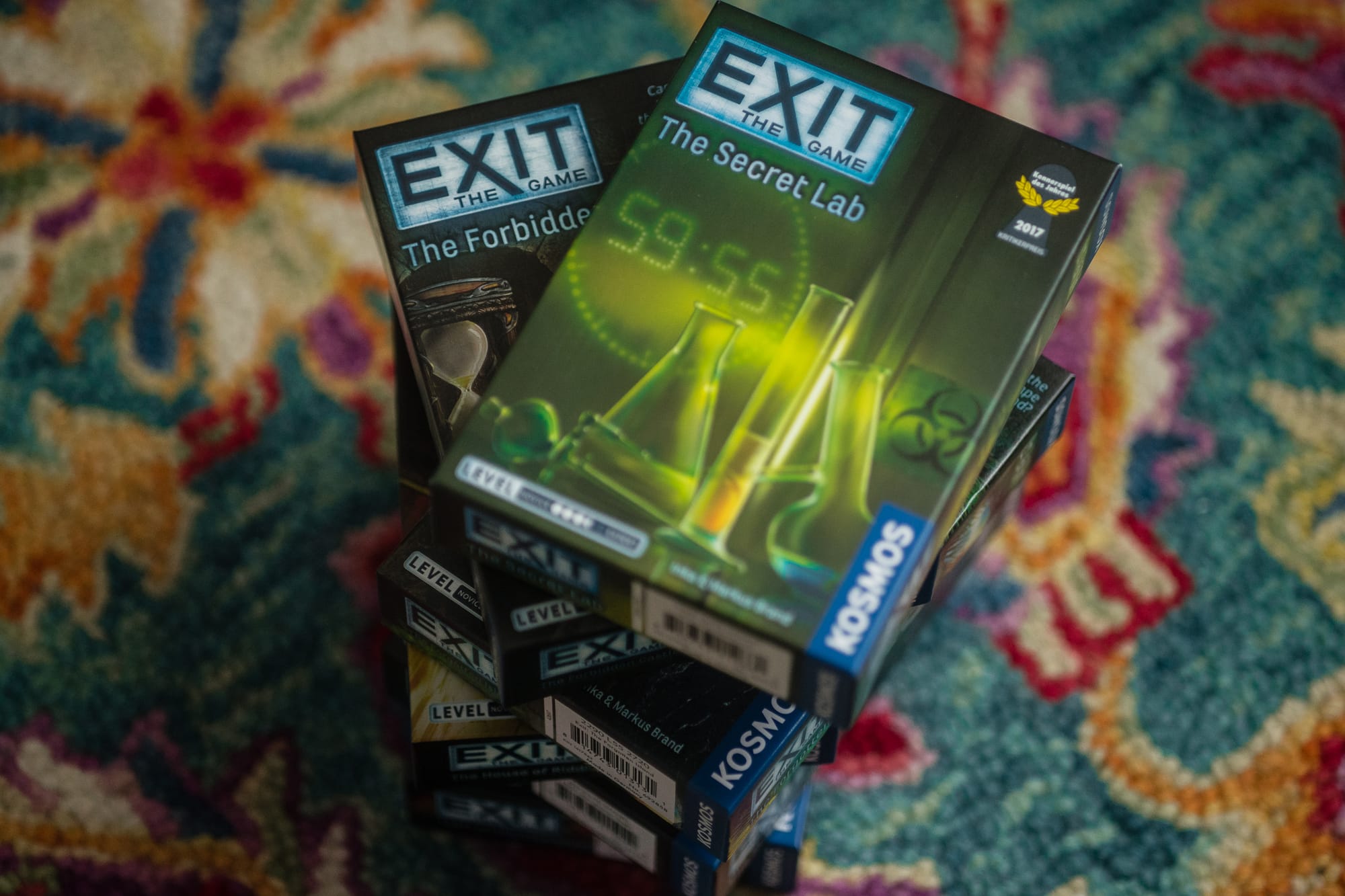

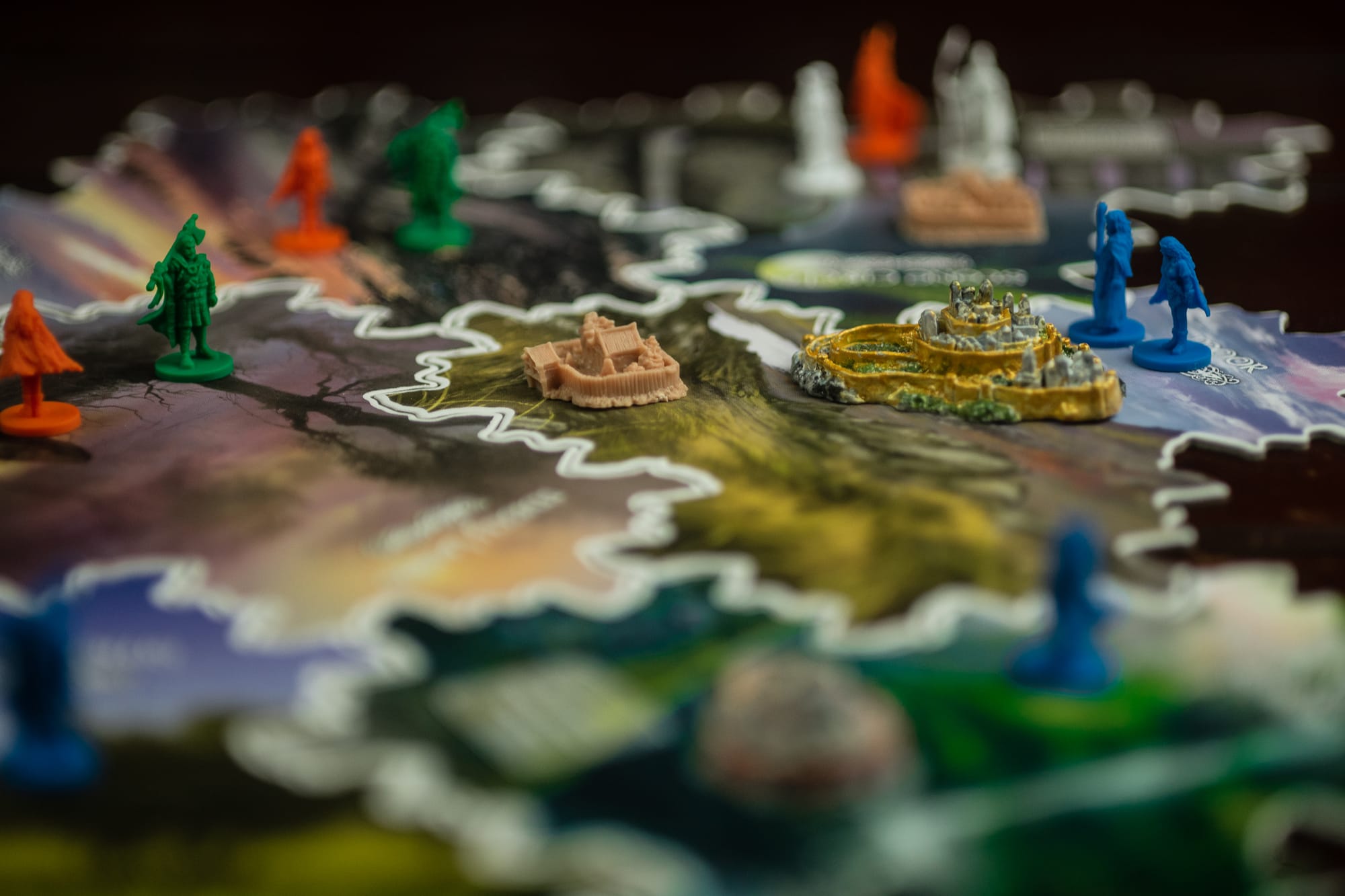

Kingdomino, EXIT: The Game, Flamme Rouge, Inis and Iberia | Photos by Matt Montgomery
And briefly, a few more interesting games from 2016 — including the more popular ones.
- The Networks (Hova) is a game about building the best programming block for a TV network. I could list the mechanisms, but that doesn’t really describe the game. The Networks really does feel like its theme. Sure, the stakes are low, but the game? The game’s fun. And thankfully, it’s now actually in print. This game spent seven years unavailable.
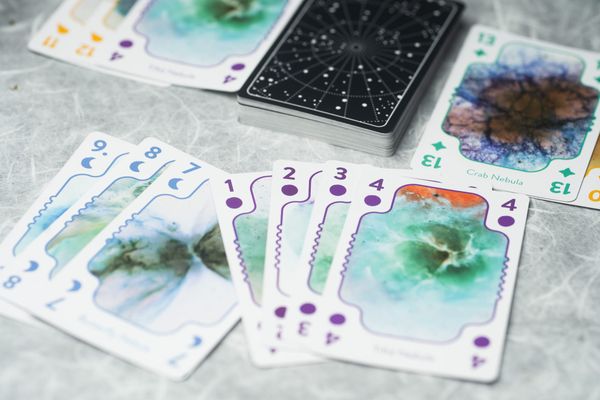
- Pups (Bink) is hard to find these days, but it’s worth the effort — it’s easiest to find as a European release under the name Verhext. The theme’s not as delightful, but if wishes were … puppies? Anyway, this is a trick-taker where you’re taking bid cards from the middle, and you can combine one of the suits (“mutts” in the original game) with other cards.
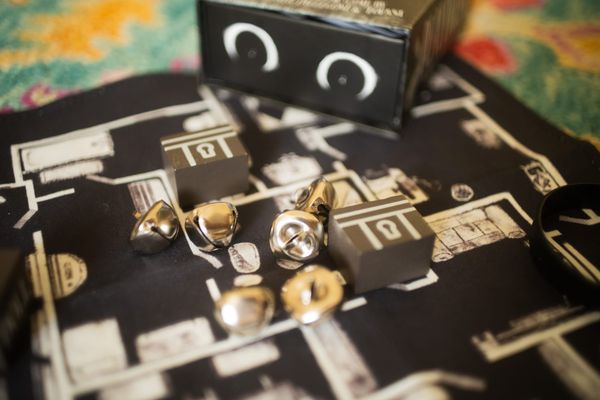
- Clank! (Dennen) is a great deck-building game where you’re trying not to make noise as you attempt to steal treasure from a dragon. It’s a great spin on the genre.
- Scythe (Stegmaier) has held up pretty well — it’s really a resource management game with a splash of everything else, and I think that’s to its benefit.
- A Feast for Odin (Rosenberg) is both an extension of Agricola (Rosenberg, 2007) and Patchwork (Rosenberg, 2014), and it’s pretty close to the peak of Rosenberg’s strategic game powers.
- Inis (Martinez) is an area control game with three different ways to win. It’s not as deeply strategic as the box size might make you think.
- Iberia (Castro and Leacock) is one of the best games in the cooperative Pandemic series — it’s got a great look, it adds railroads and disease treatment, and if I had to pick just one, it might be this one.
- Flamme Rouge (Granerud) is such a great deck-building and racing game. It led to Heat: Pedal to the Metal (Granerud and Pedersen, 2022), but I think I still prefer this one.
- EXIT: The Game (Brand and Brand) started in 2016, and it remains an incredible series of cooperative games to this day.
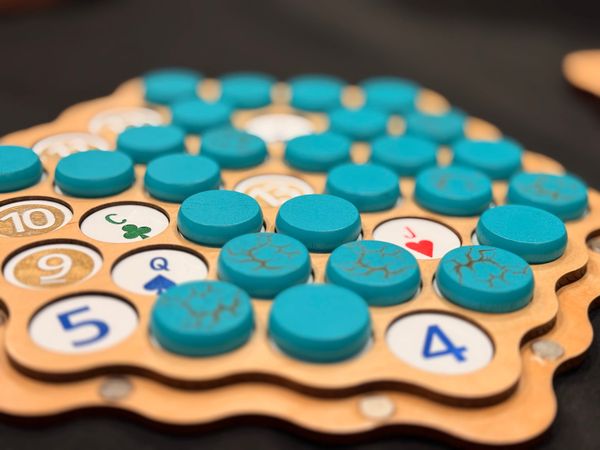
- Santorini (Gord!) is an abstract game with those iconic blue roofs, with one player trying to reach the top of the city before the other.
- Kingdomino (Cathala) is a simple, effective tile placement game that works with younger (and older!) players.
I could go on — but I don’t need to. There’s a whole world out there for you to explore. 2016 isn’t when board games ‘got good’ — it was much earlier — but there does seem to have been a critical mass of gamers emerging around this time. We see games released by year really starting to tick up around 2016, too.
Anyway! What about you? What are your favorite games from 2016? Is it hard to believe that’s a decade ago?
 Matt Montgomery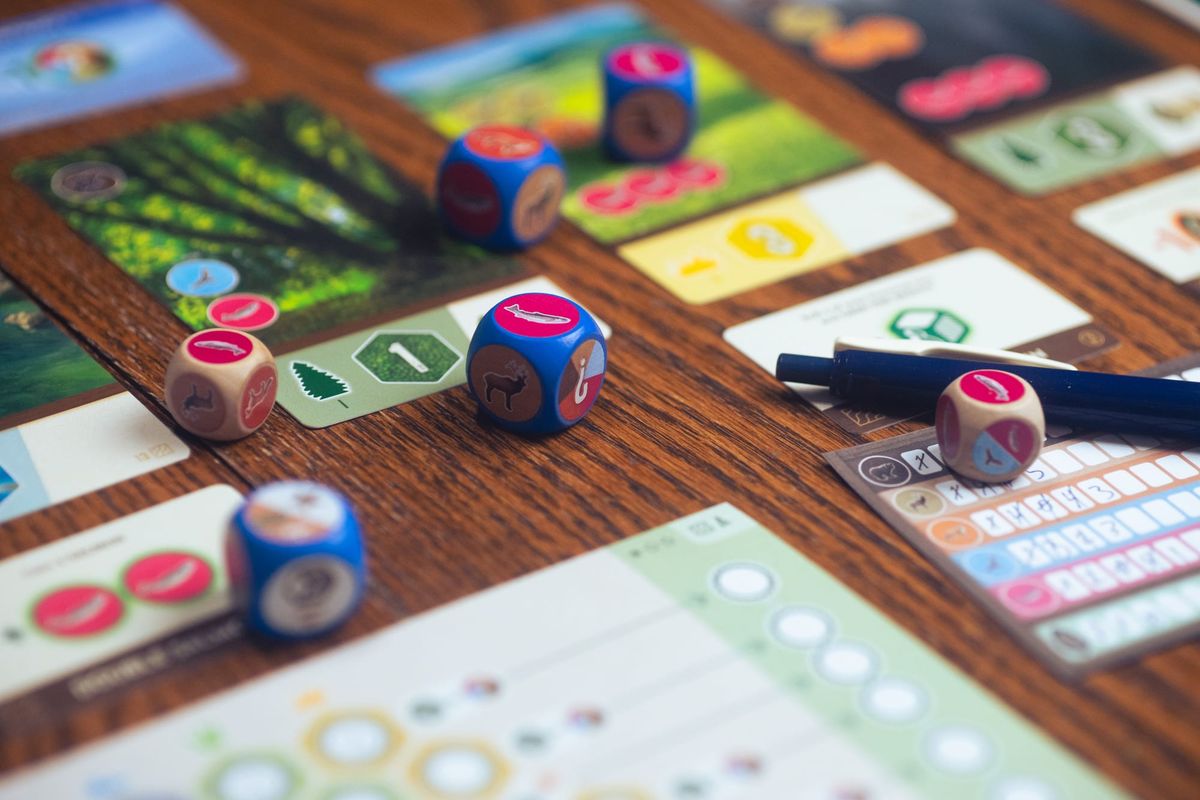
 Matt Montgomery