Breaking down the 2025 Golden Geek Awards
Are this year's fan votes worthy winners?

The Golden Geek Awards are not the biggest awards in board gaming (that honor goes to the Spiel des Jahres), nor are they the most exciting (I prefer a panel vote than a popular vote; there’s more drama). But they are perhaps the best at giving us a clear snapshot of where gamers are these days, and I think there’s something particularly interesting about paying attention here.
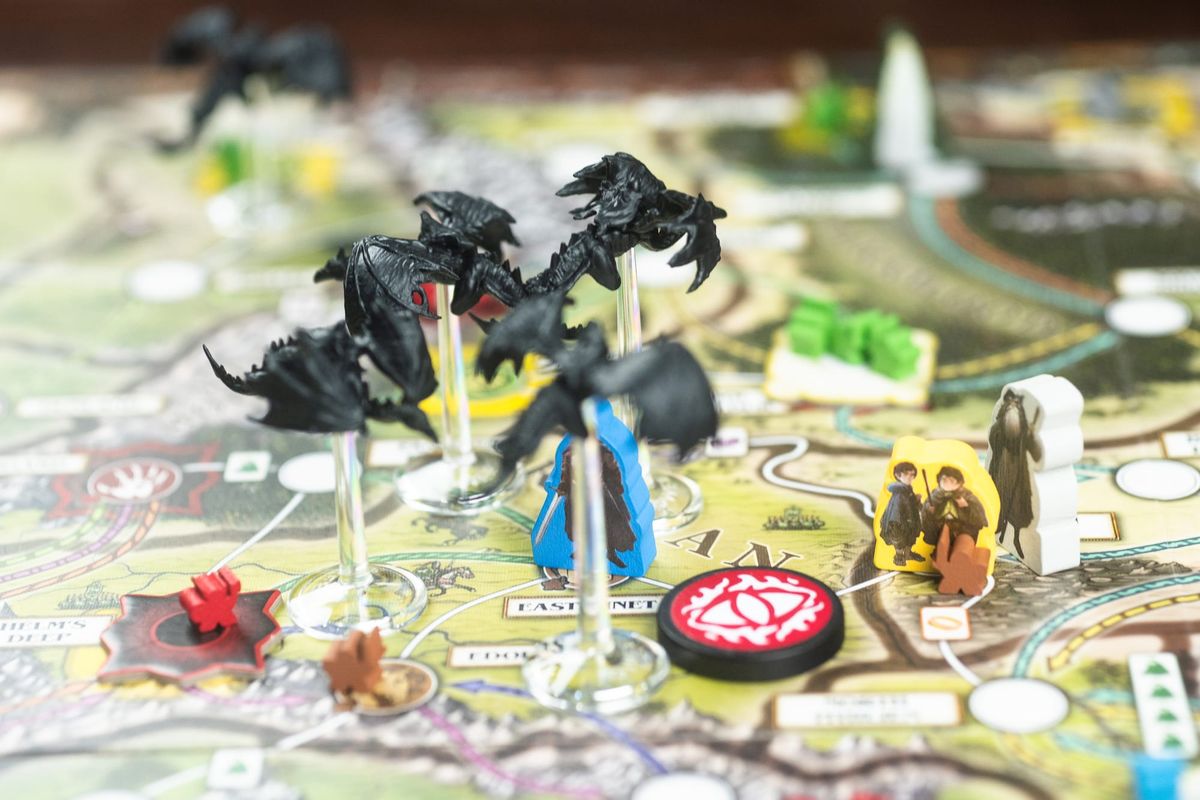
Let’s talk first about some of the big winners in the awards this year. First, The Lord of the Rings: Fate of the Fellowship (Leacock, 2025) is clearly a hugely popular game among the BGG audience. It’s a winner in Cooperative, Thematic, and Medium Game of the Year categories; and it’s a runner-up in the Artwork & Presentation and Solo categories. No complaints here. I think it fits in all of those categories well.
There are of course several factors to the game’s inclusion. It’s genuinely a delight, and it’s a fantastic extension of the Pandemic system. At no point does it feel like a game that exists as a spin-off. We must also consider that it seems The Lord of the Rings is in the middle of a moment in board games, which oughtn’t be all that surprising. It’s not the first time the series has had major success in board gaming.
 Matt Montgomery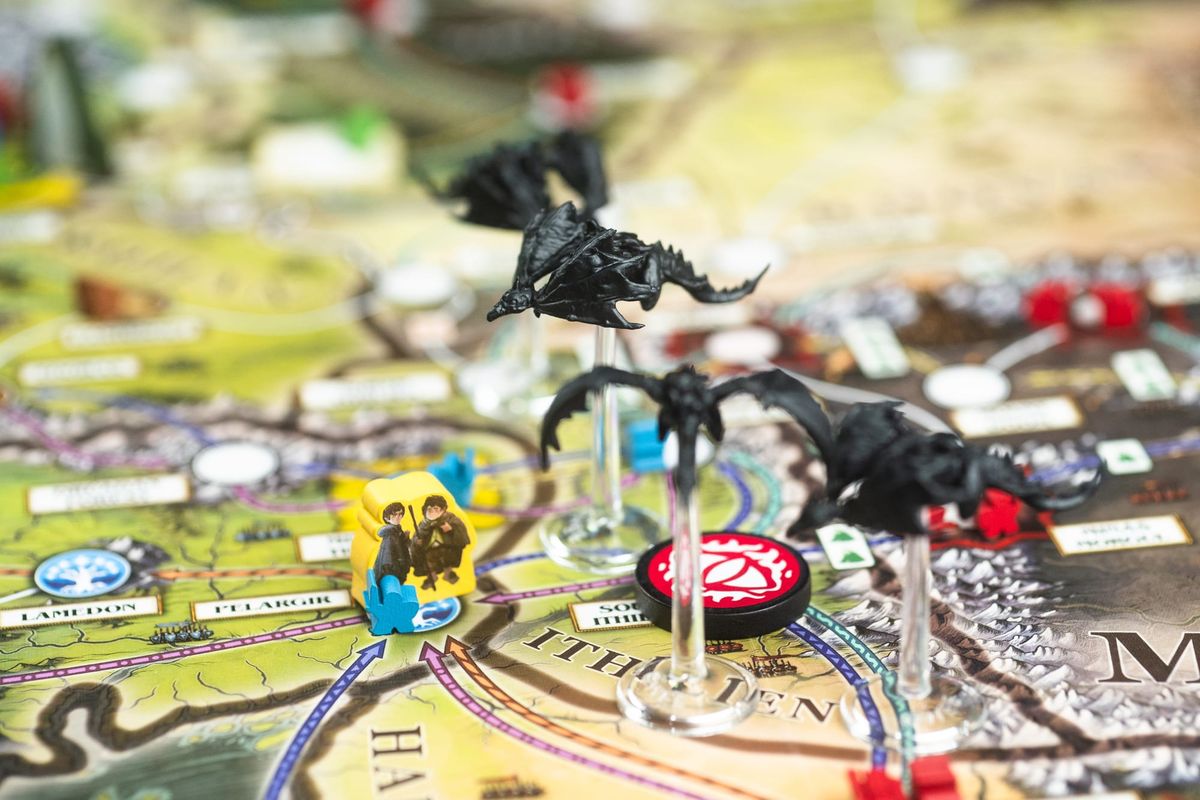
I initially thought it a bit interesting the successful and well-regarded The Lord of the Rings: The Fellowship of the Ring — Trick-Taking Game isn’t on the list, but to be 100 percent fair to voters, that particular game actually won in the 2024 awards, and these are the 2025 awards. I have a bit of compunction about that, because it was only available to a very small audience (relatively speaking) in 2024 in a prerelease sort of thing and to reviewers. But the voting took place largely after the game was fully released, so I think my complaints are academic. (I also think it would be unusual for a sequel to be voted in, though I do really quite enjoy what it brings to the table.)

An interesting occurrence this year is that Hot Streak (Perry, 2025) won for both Light Game of the Year and Party Game of the Year. The two awards have been split since 2021, though the first year for Party Game of the Year, 2006, actually included light games explicitly in its title. The two have never actually overlapped this strongly, though I suspect it was always destined to happen at some point, and it will (perhaps rightly) have ourselves asking some questions about the voting.
The thing we will not be asking questions about, though, is the quality of Hot Streak. It’s as fun a race-betting game as I’ve played, and I’ve played at least two of them. (They were also quite fun. This is rarified air.) I do think it’s a great light game, and I do think it works really well as a game for larger groups. And that’s mostly what party games means in this context, right? I strongly suspect so.
Now, to a wider audience, a party game is a different sort of thing — games that are decidedly casual, can easily be dropped in and out of, extremely accessible to non-gamers, that sort of thing. Is Hot Streak a great party game? I don’t think it fits the commonly accepted definition, though for a party full of gamers, it’s perfect. You can decide what that means to you.
Still, at least in Hot Streak, there’s a swell of excitement during the race. You’ve made your bets, now you just get to sit back and see what happens, but what happens is going to be weird, and it’s going to make people laugh. Maybe it is a great party game.
 Matt Montgomery
At runner-up in, again, both of these categories is Magical Athlete (Garfield and Ishida, 2025), another racing game, but this time you’re getting to move the racers yourself. It’s a fascinating game, in that it intentionally limits the number of decisions you’ll get to make, but it’s quite fun, really.
I don’t think Magical Athlete is as great a party game, and I think it’s only one in the sense that it can play up to six players — which I don’t think is really party game territory. I love this game, but if I’m taking Magical Athlete to a party, it’s actually just a game night. (Notably, BGG’s own taxonomy doesn’t have Magical Athlete as a party game. It really shouldn’t have been eligible for this award. Light game? Yes! Absolutely. Party game? No.)
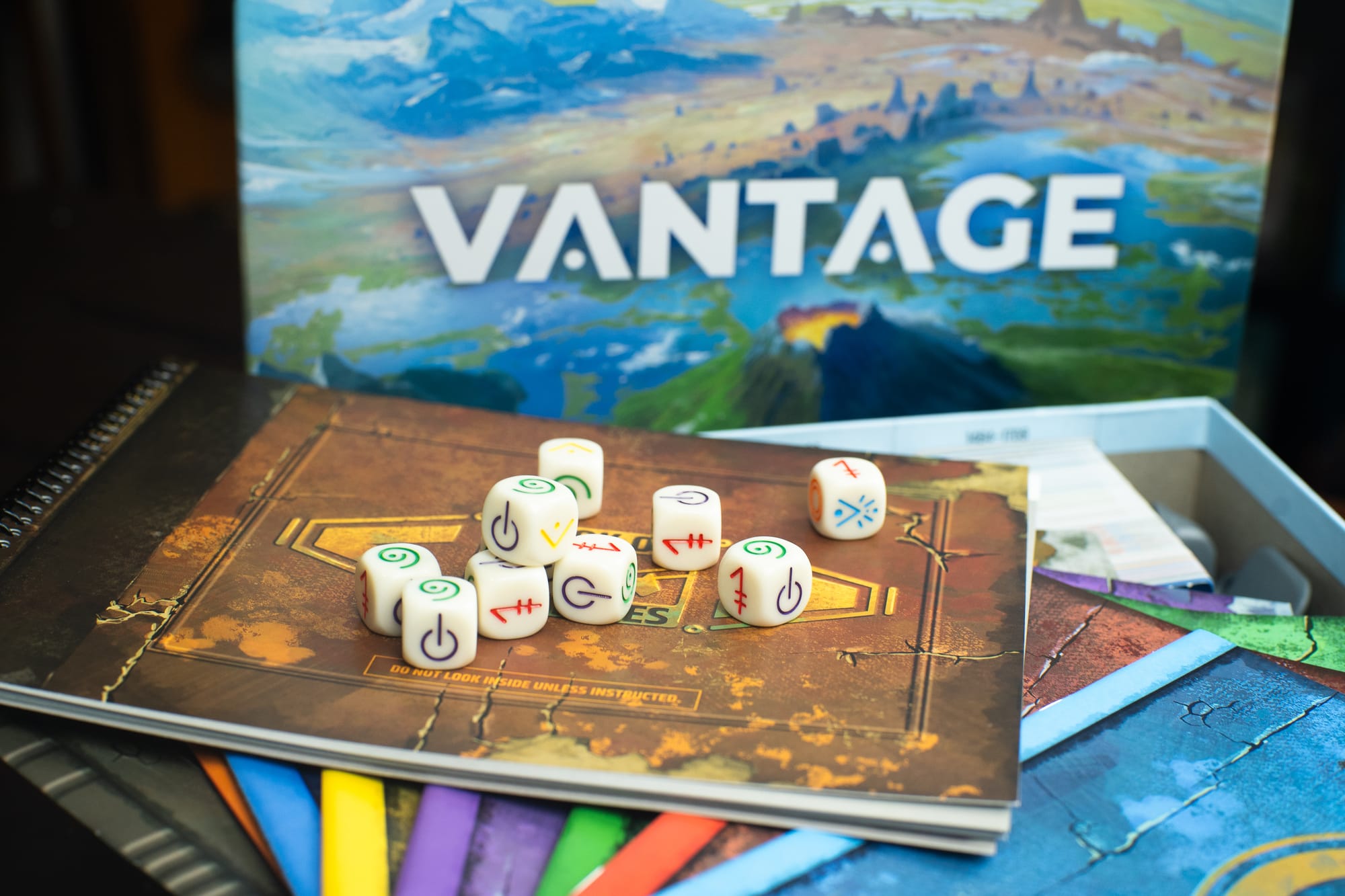
The Cooperative Game category is an interesting one this year. We talked about Fate of the Fellowship above, and I won’t belabor it here. I think it’s a deserved winner.
Vantage (Stegmaier, 2025) is a bit of a classic adventure game in a board game body. It’s big and a little unwieldy, but it’s also graceful for such a broad, exploratory game. It’s a remarkably smooth experience, but you’ll also find yourself wondering what circumstances will prompt you pulling the game off the shelf again. Is it mostly a solitaire or two-player experience? Can you have a ton of fun with this one at the maximum player count?
 Matt Montgomery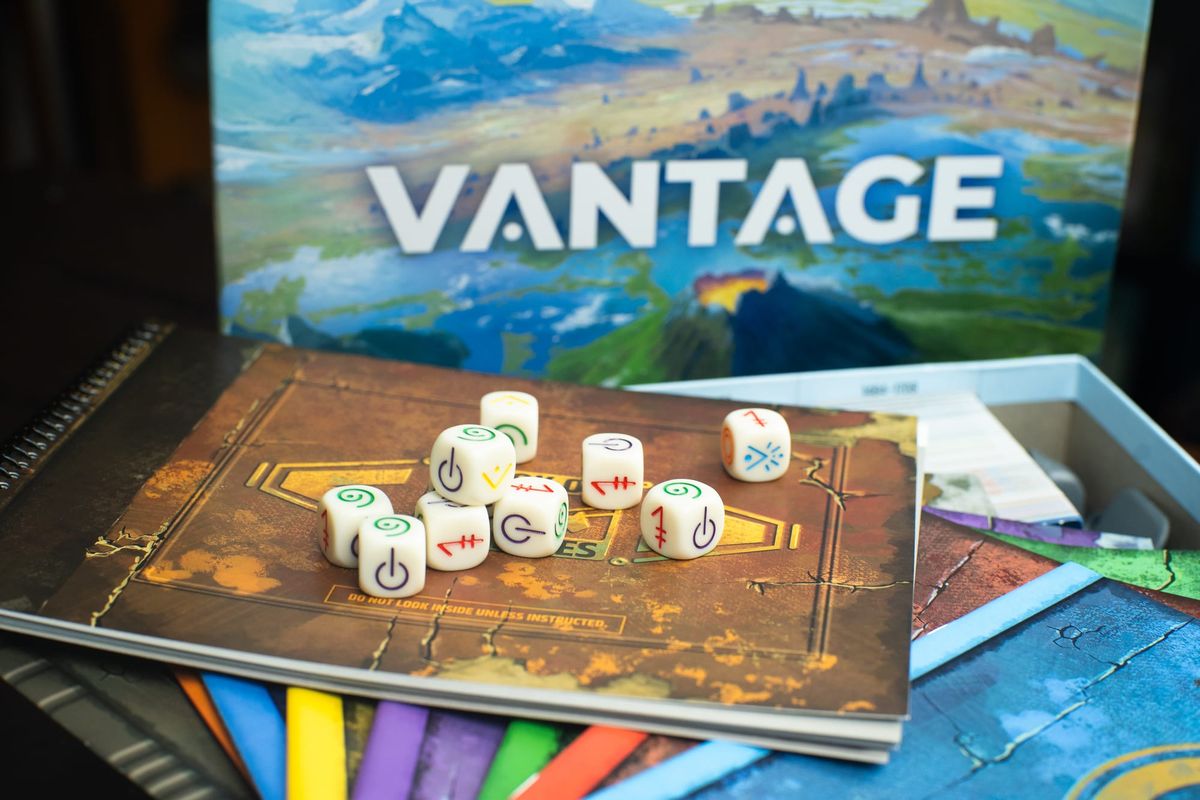
Eternal Decks (Hiroken, 2025) is sort of an arcane-looking thing. The colors are stark, the user experience is pretty dense, and the play is a little wonky. It’s a deck-building game in some ways, but it’s cooperative, and you’re basically building your deck by collaboratively defeating Eternals. It’s a lovely experience, but it’s also, you know, kind of weird.
I guess I’m a little surprised it’s here, given it’s not widely available as of yet. Portland Game Collective’s English-language edition still isn’t released. I’ve played it because I backed the Kickstarter. Maybe all 1,156 backers of the project voted for it? I don’t really know how many people voted for the game anyway, so maybe it’s a true selection bias problem. The game has some (justified) hype around it, and it’s easy to imagine that’s played into it somewhat.
I’m not surprised these two made the final list, but it’s also a curious thing. What are folks looking for in a cooperative game remains a bit of an unknown, and I’m stuck wondering: What makes a game great for the Golden Geek Awards? These are great games, but what about them in particular made them voters’ choices?
And maybe this is why I tend to find awards given by a panel more interesting. There’s an opinion you can engage with, even if they’re not providing any real level of clarity in anything written. There’s a continuity in vote that you can think about. With a voter’s choice award, you’re at the whim of voters in that particular moment. If a game gains steam at the right time, it’s likely to be a lock for a spot. Right? And that doesn’t make it not a great game, but it also doesn’t give us a whole lot to work with.
I’m sure I could go on here. I’ll end with a plug for a podcast that made the nominees but didn’t make the runners-up: Decision Space, which consistently goes in-depth on interesting games. They’re not out here talking about heavy games, but they’re talking about games that approachable for a lot of players. I can’t recommend it highly enough. It reminds me a lot of older episodes of Ludology.
We’ll talk again next week, alright? I’ll have things I’ll want to talk about. (You will, too.)
Support Don't Eat the Meeples with a subscription today. Will you be the first to receive an exclusive monthly newsletter?