Eight entertaining board games for summer fun
Sometimes you just need to sit down and play something entertaining.

It’s easy sometimes to look at a shelf of games and pick out the ones that are the most fulfilling. Whether that’s because they’re the most challenging, the most engaging, the most interactive, it’s easy to just grab your favorite game, new or old, and present it to a group. Or maybe you’ll grab a dozen games fitting those rough criteria — I won’t judge, I do the same thing. When you’re playing with gamers, that’s often a great call.
Sometimes, though, you need to grab a few games that aren’t dabbling in superlatives. You need a game that’s quick to play and presents something a bit novel (but not massively so) and, most importantly, packed with fun. Of course, we oughtn’t get too far without defining fun. It’s a great rule of thumb when describing games:’ fun’ is a somewhat miserable descriptor because it doesn’t actually say anything of note. It’s a variable, personal thing. Perhaps we should revise our definition of ‘fun’ here, because I do think there’s something lost if we stop talking about some games as fun things.
I want to talk about games for which entertainment is a clear priority. These are games that try to engage everyone at the table. These are games that make you laugh together because entertainment is the focus.
Japanese outfit itten publishes one of my favorite lines: a series of five-minute games. These fast-paced, rapid-fire games are packed with entertainment — at least the several I’ve played. (I’m confident in the remainder, and I’d love to play those, too.)
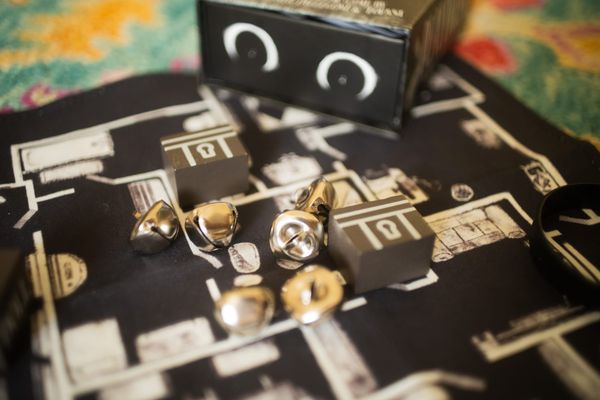
- Pack-Back Robot (Ikegami and Shimamoto, 2026) is a two-player game where each player has a little plastic robot head. They’ll use those robot heads to eat a bunch of colored cubes, which they’ll then spit out one-by-one, placing the cubes in columns on a card. If you can’t place a cube in a column, you’ll just discard the cube. It rarely works out as well as you’d hope.
- Candy Tap! (Shimamoto, 2026) has players tapping on a box to knock loose some candy cubes. You’ll earn points for the candy you collect, but if you knock out the last piece of candy (which you’ll probably do when you hit the box harder than you intended, spilling every last cube all over the table) you lose.
- Ping Pond Frog! (Tomioka, 2026) pits two players against each other in a game of … tossing a ping pong ball off a wooden lily pad and trying to knock down their opponent’s pieces. I mean, what more do you want in a game, really? Worker placement? No thank you, give me a ping pong ball I can toss. (I kid, I kid. But seriously.)
- Nice Egg! Deluxe (Shimamoto, 2026) is a set collection game (a classic card game mechanic!) but you get cards by dropping a wooden disc from a plastic egg that you ‘crack’ open. If you land your piece right on the yolk, you get two cards of your choice. If you land on cards, you take the lowest-priority card you’re touching.
- Kappas Bros! (Tanaka and Shimamoto, 2019) is sort of a game about water tension. You’ll use a straw to draw some water from a cup and place it on top of a Kappa — a water monster from Japanese folklore. If you spill the water, you lose. It’s cute, and it’s (at least very slightly) educational! (Just what you were asking for in a game, right?)
There are plenty of other itten games worth your time and attention, if you’re looking for something longer — Viking See-Saw (Knizia, 2021) has players placing objects on a rocking ship, Crash Octopus (Shimamoto, 2021) has players flicking pieces and dropping a die on a wooden octopus head, and Tokyo Highway (Shimamoto and Tomioka, 2018) has players buidling an increasingly interwoven highway system. There’s a reason they’re one of my favorite publishers — they try things others don’t.
TEAM3 (Cutler and Fantastic, 2019) is a cooperative block-building game: You have to build what’s shown on a card with a limited selection of pieces. The twist here is that one player can see the card but can’t touch the pieces or speak, one player can speak but can’t see the card or touch the pieces, and the final player can touch the pieces, but they can’t see anything at all. Each player is involved in building a small structure, and I’ve always seen laughter ensue.
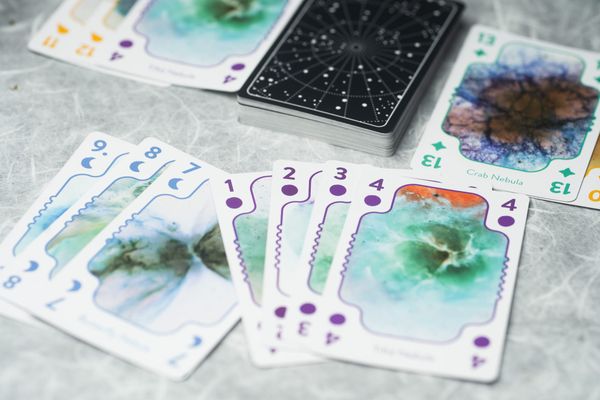
Trifle (Ross, 2026) is a self-described ‘breezy’ trick-taking game. It’s a casual game by one of the great modern card game designers, Sean Ross, and it’s a spin on the traditional card game Briscola. It’s a point-capture game, so the player who captures the majority of the 60 points available wins. You’ll only ever have three cards in your hand at any given time, and after each trick, you’ll draw a card, with the trick-winner choosing between a face-up card and a face-down card. The casual nature of it is a good reminder that entertainment doesn’t have to be outrageous or weird — it can just be a nice pastime. (While this one isn’t widely available, the rules are published under a Creative Commons license, and you could definitely figure out a way to proxy the game.)
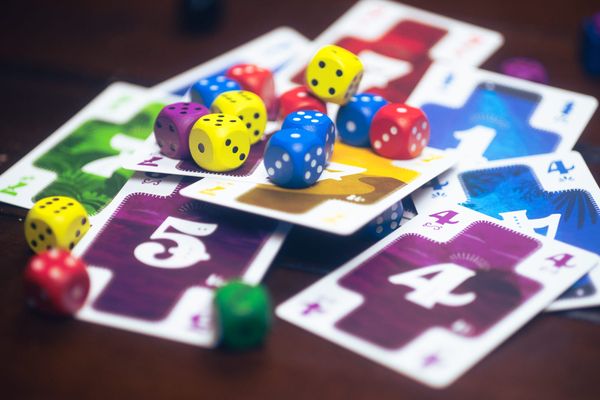
Mythical Dice (Reindl, 2016) is sometimes described as Skull King: The Dice Game, which is actually completely reasonable, because it was also initially released as that very thing. It takes the cards-per-round and bidding from Skull King (and Wizard), as well as the special cards and their rock-paper-scissors relationship. Except everything is made of dice, and when you play to a trick, you’ll roll your die. See, that’s the wild thing: You have no idea what value you’ll be playing to a trick until you roll the die. The different dice colors (suits) have different value ranges, and while it’s a must-follow game, it’s the highest-rolled number that wins the trick (except for those special dice, of course).