Three easy-to-teach games to replace classic board games
Move on to bigger and better games with these three classic designer board games.

Ah, hello! I hope you're having a great day. I'm having a nice one, myself. My birthday was Tuesday, and I thought about just writing about my N favorite games, where N is my current age, but I did just write about 33 trick-taking games, and honestly, adding even more games to a list that size just seems like a terrible idea. Maybe I'll do it over a series of posts or something.
At any rate, we're here today to talk about replacing classic board games. I won't get in the way of that, so let's get talking.
Replace Yahtzee with Sausage Sizzle
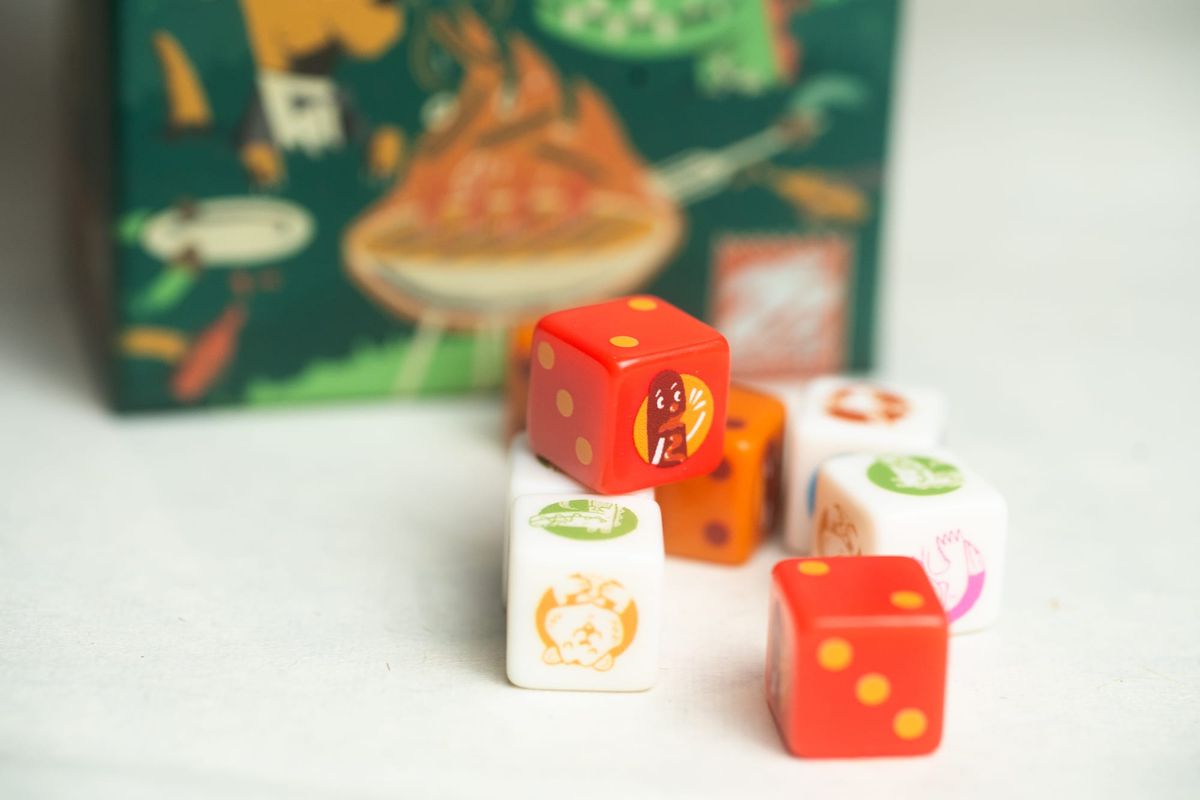
Sausage Sizzle (Brand and Brand, 2012) is a dead-simple push-your-luck game from two of the great game designers, Inka and Markus Brand. They’ve designed so many absolutely incredible games, and Sausage Sizzle — originally released as Würfelwurst, then later as A.E.R.O., — is no exception. You’ll be rolling eight dice to start your turn, then you’ll lock in the dice you want to keep then roll the remainder. You’ll need to lock in at least one die per turn, so you’ll need to be prepared to take on suboptimal rolls at times. You’ll be rolling four dice with animals and four dice with numbers, then you’ll choose an animal you haven’t scored before. To score, you’ll multiply the lowest number on the number dice by the number of matching animals of your chosen type.
Simple enough, but the twist is what makes this game: Instead of a 1, there’s a sausage on the dice. If you have a sausage and three fives, for example, you’ll multiply your animals by just 1 — a distinctly disappointing event. If you have four sausages, though, you’ll multiple by 7. There’s a real risk in trying to roll four sausages, and wouldn’t you know, I spent half my time trying to roll four sausages, largely unsuccessfully.
I love it when a game puts you in a position of acting counter to common sense. Now, in push-your-luck games, I am particularly prone to pushing my luck too far and acting recklessly, especially when there’s no social contract putting me in a position where I feel like I need to rein things in. If I score extraordinarily poorly because I went for an incredible score and fell on my face, that doesn’t hurt my opponents’ experiences. In reality, I guess I hope it heightens them. And I hope they all stand up and clap when I finally score 28 on one of my animals. (That did happen once, actually. The scoring 28, I mean. Not the applause.)
How does this Sausage Sizzle replace Yahtzee? In some ways, it’s a direct replacement: You’re rolling dice to score, but instead of making combinations with just numbers, you’re making combinations with animals and numbers. You can only score each animal once. See? They’re basically the same game. I think. (Please do not make this claim about the hundreds of trick-taking games I’ve played.)
Designed by Inka and Markus Brand, illustrated by Ian O’Toole, and published as Sausage Sizzle by 25th Century Games.
Replace Monopoly with High Society
Alright. I know High Society (Knizia, 1995) is not all that much like Monopoly. I know the auction mechanic in Monopoly is woefully underutilized owing to the glut of house rules that make Monopoly a very strange game. (Can we take a sidebar here? I actually think there’s something incredibly interesting about house rules and Monopoly. I’m sure somebody’s written something about it. Several somebodies, in fact. But how fascinating is it that this game, with rules that are at least somewhat plainly written, is so often played with unwritten rules? There’s an ethnographic study just waiting to be written here. I’m not trained in that sort of work, but I guess it’s never too late to start, even after you’re officially over the hill.)
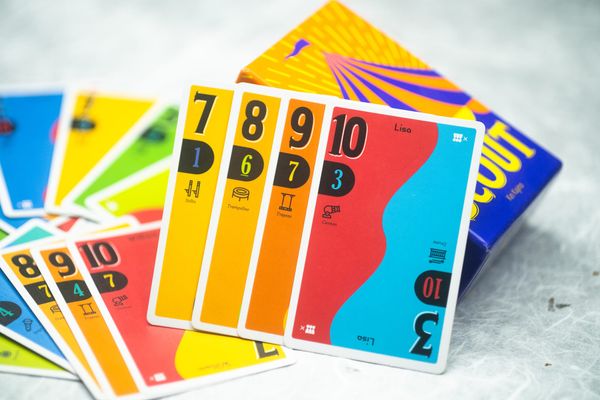
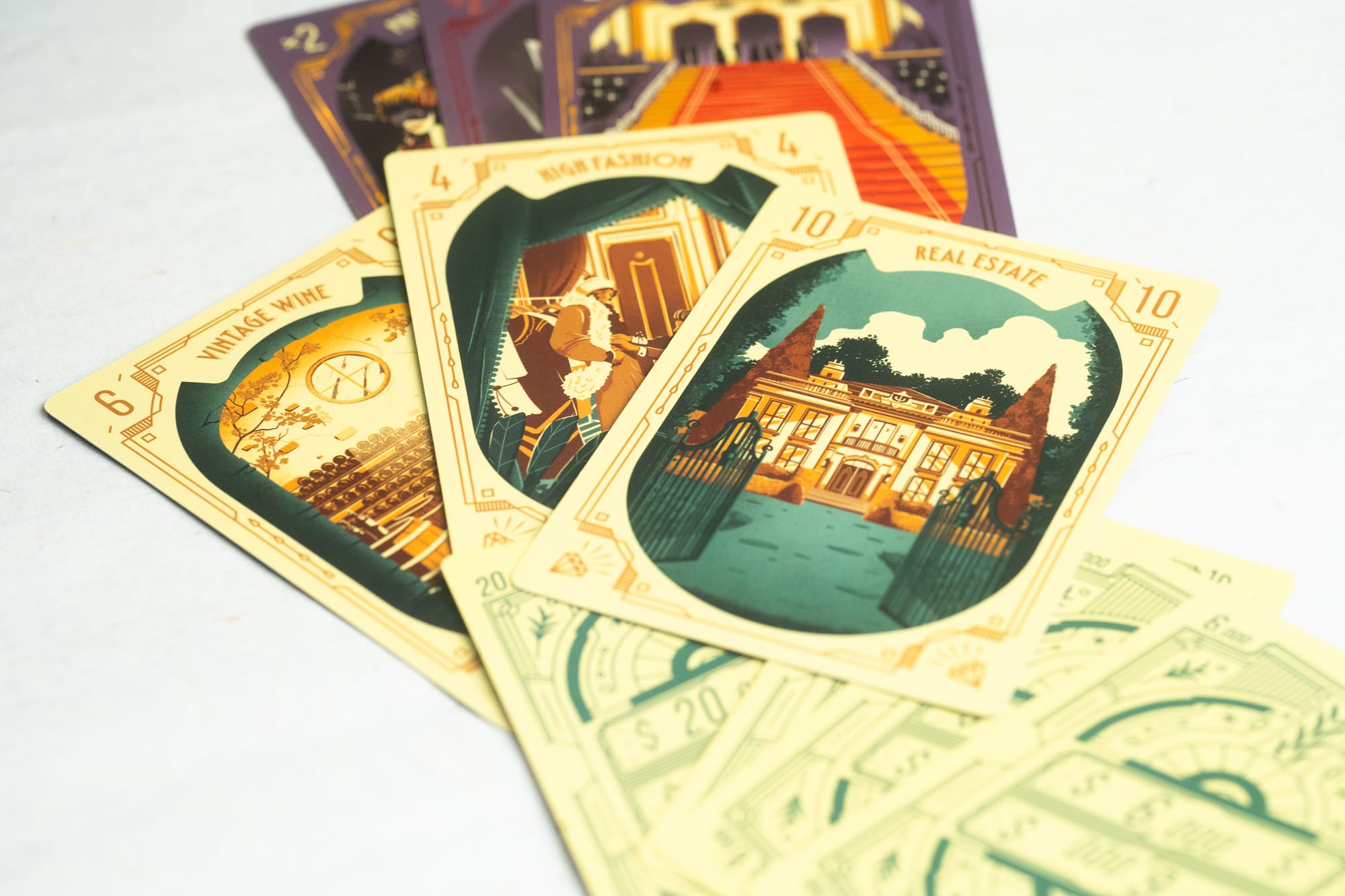
OK, I think we need to start talking about High Society again. I’m sorry about getting sidetracked, I guess. So, High Society is an auction game. It’s a straightforward auction game. The basics are this: Everyone starts with the same amount of money, and that money comes in the form of cards, and you can’t ever make change. It’s strictly forbidden. (That’s important!) Each round, one card will be auctioned off. There are Luxury cards numbered from 1 to 10, three prestige cards that each double your score, and three scandal cards that will reduce your score. They’re all shuffled together, and each card is auctioned off individually until the three luxury cards and one of the scandal cards (the 1/2 score card, specifically) have appeared at the auction table. Once the fourth appears, the game ends immediately.
The auction for luxury and prestige cards are simple — you’ll go around until all but one player passes, with each player increasing their bid or bowing out. Simple enough, until you realize that you bid with your low-value cards in the first auction, and now every bid you make is just impossibly high, because — again — you can’t make change. Aha! I love it. Scandal cards are a bit different: With these cards, everyone is bidding to not take the card and the hit it will have to your score. The player that passes takes their money back and takes the scandal card, and everyone else discards their money. They’ve spent it to avoid the scandal, and I’ve just not had enough dignity to bother — but I hope I’ve brought my fellow socialites down a peg.
The variable end condition (the fourth card of the set coming out; they’re purple in the most recent edition from AllPlay) makes a massive difference here. You might think you’re set up well, as long as you can just get that last card — but no, maybe it never appears, stuck at the bottom of the deck.
Oh, and before I forget: the player who pays the most money — the player who has the least money remaining in–hand at the end? They’re ineligible to win. If you’ve bankrupted yourself, you’re just out of the game. Aha. This game is pain in a little box, and I adore it for that.
How does High Society replace Monopoly? I think the answer is simple: It’s all about trying to bankrupt everyone else, timing your bids in such a way that your friends are put in terrible positions by the result of your actions. I just think High Society does a considerably better job at achieving that particular aim.
Designed by Reiner Knizia, illustrated in the most recent edition by Marie Bergeron, and published most recently in the U.S. by AllPlay.
Replace Jenga with Animal Upon Animal
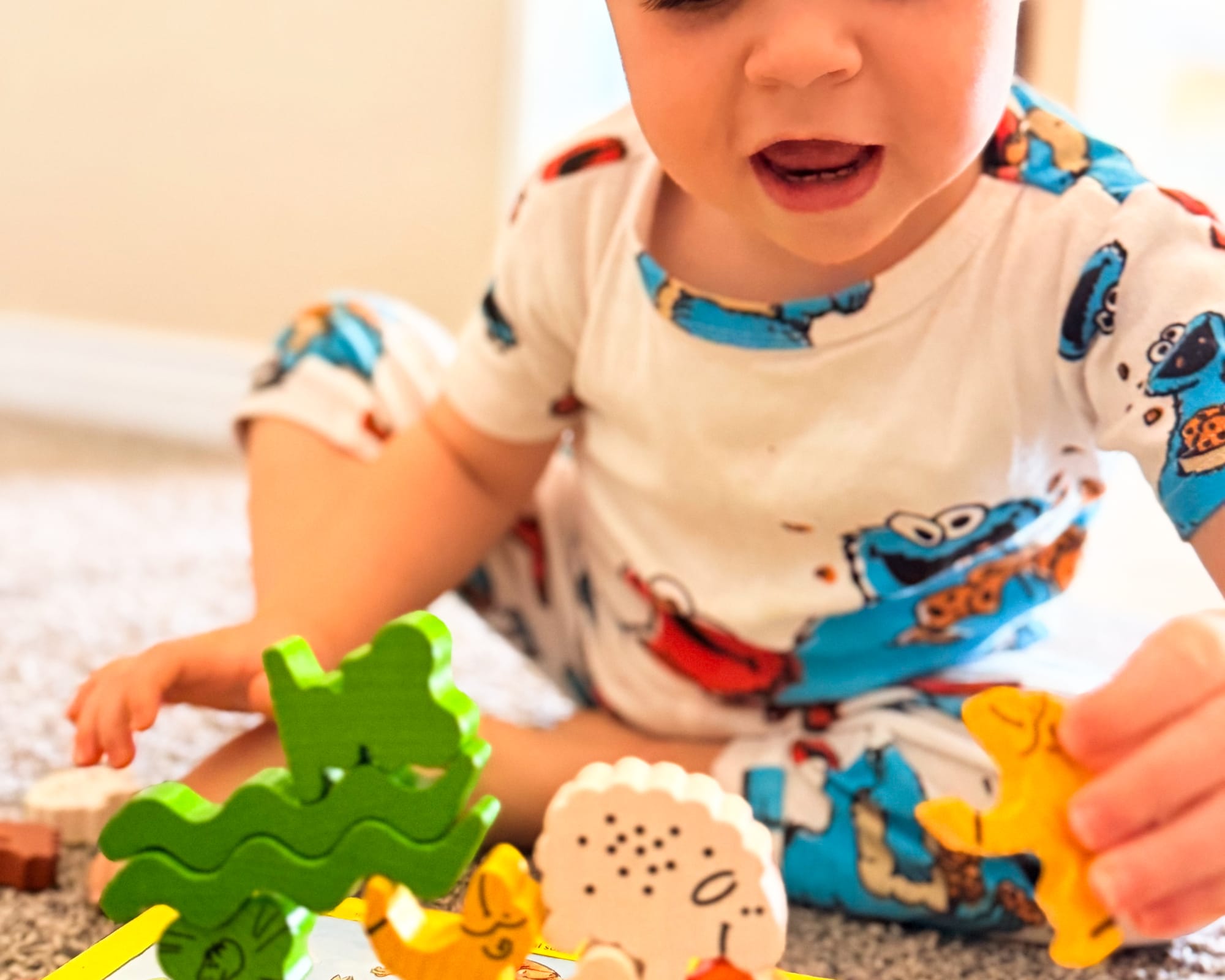
I know what you’re thinking. Why did I spend two hours figuring out which exact versions of Animal Upon Animal (Miltenberger, 2005) feature a flamingo? Oh. That’s not what you were thinking. Alright, it’s probably that the yellow box is exactly what you’d expect from a (cue the music here, please) game for children. Oh no! Disastrous, really. I do want you to hear me out on this, though. Yes, Animal Upon Animal is a game for children. It’s listed as 5+ on the box. I regularly play with my two-year-old. No, he is not good at it. And no, we don’t play with the hand icon. (He hates giving away his pieces. He doesn’t really care about winning, though. I’m proud.) To be fair, I am also not good at this game.
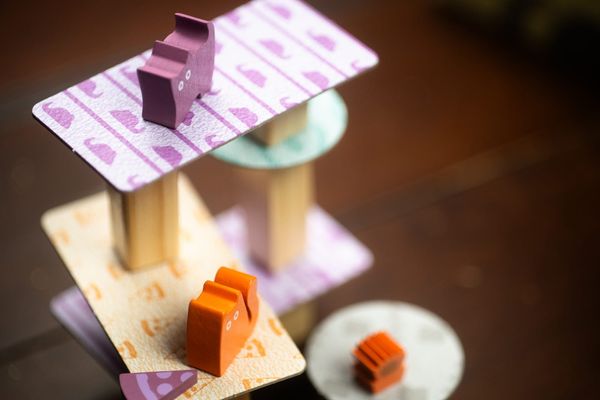
And that’s the point. Animal Upon Animal is a dead-simple stacking game. You’re just stacking animals on top of each other, and they’re all on top of a crocodile. (Alligator? I can never remember the difference.) The pieces are delightful and made of wood. See, that’s Jenga. If your opponents knock pieces off the structure, they take those pieces back to their supply, and the first person out of pieces is the winner.
Yes, this is a game for children. But it’s a game for children in which you can stack defensively, hoping to make life difficult for your friends. You can play in a way that makes play for others easy, hoping that they’ll work in ways that benefit you. You can be surprisingly tactical in this game. And yes, you can knock pieces off when you’re just trying to place that awful lizard on top of a sheep. It’s much easier than you might be anticipating when you open that big yellow box.
So, yes, this is a kid’s game. But if you’re looking to sub out Jenga for a game that’s a bit more boutique, a bit more interesting, a bit more engaging, you cannot go wrong with Animal Upon Animal.
Designed by Klaus Miltenberger, illustrated in the most recent editions by Daniel Döbner, and published by HABA.
Thank you, as always, for reading! And apologies for sending this email in the middle of the night. I meant to schedule it; I clearly just hit the publish button instead. Live and learn!